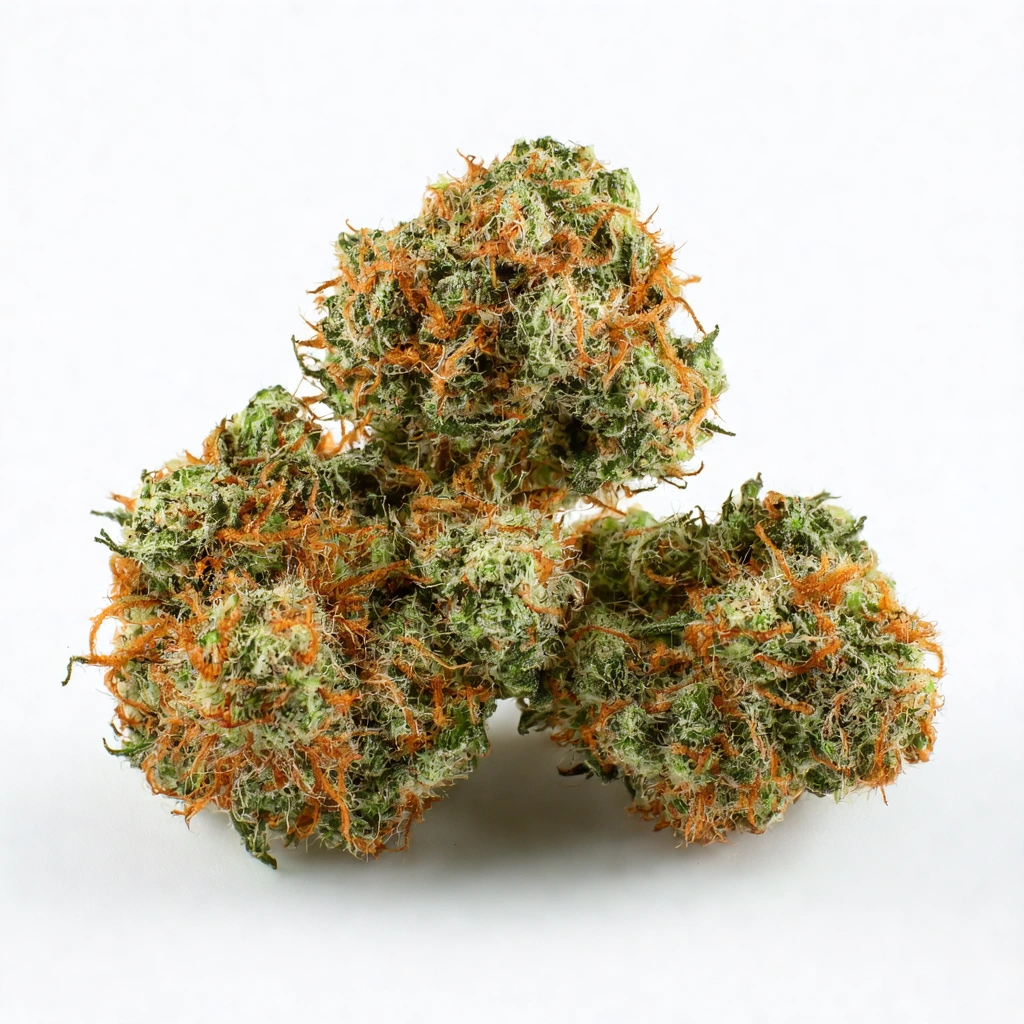
Alien Tarantula
Alien Tarantula
What is the Alien Tarantula strain?
Alien Tarantula is a hybrid cannabis strain with up to 25.0% THC, known for its relaxed effects and citrus and diesel flavor profile.
Alien Tarantula is an indica-dominant hybrid cannabis strain created by Obsoul33t Genetics through crossing a Tarantula mother plant (itself a cross of Kyle Kushman's Strawberry Cough × Alien Kush) with an Alien Technology father. The Alien Technology parent is a rare landrace strain reportedly obtained from a U.S. soldier returning from Afghanistan, characterized by its pure indica genetics, light green buds, exceptional trichome production, and distinctive spicy, hashy flavor profile with fuel undertones. This unique genetic combination produces an intriguing strain that offers more cerebral stimulation than typical indicas while maintaining relaxing physical effects.
Alien Tarantula plants display dense, olive green and purple buds with patches of deep amber hairs and golden trichomes that heavily coat the entire flower structure, making them somewhat difficult to break apart by hand. When properly cultivated, the strain exhibits vigorous growth characteristics and robust genetics that have impressed experienced growers. The flowering period ranges from 60-70 days, making it suitable for both indoor and outdoor cultivation in appropriate climates.
What are the effects of Alien Tarantula?
What are the medical benefits of Alien Tarantula?
- Users report relief from anxiety
- May help with depression
- Often used for stress relief
- Users report pain management benefits
This is not medical advice. Consult a healthcare professional.
What are the side effects of Alien Tarantula?
- 💧 Dry Mouth
- 👁️ Dry Eyes
- Dry mouth
- Dry eyes
- Possible anxiety in novice users at high doses
How do you grow Alien Tarantula?
Alien Tarantula is considered a moderate difficulty strain suitable for growers with some experience. The plant has a flowering time of 60-70 days and can be cultivated indoors, outdoors, or in greenhouse environments. It demonstrates vigorous growth with strong, lush development and requires consistent humidity and temperature control (68-82°F optimal). The strain benefits from organic nutrients and ample space for root expansion. Plants show good pest resistance and produce dense, resinous buds with heavy trichome production. Only available as regular (non-feminized) seeds, allowing for phenotype selection and breeding projects.
How should you use Alien Tarantula?
Alien Tarantula is a hybrid strain with 25.0% THC, which is considered high potency. As a hybrid, it offers versatility for both daytime and evening use.
Beginners
Start with 1-2 small inhalations or 2.5-5mg if using edibles. Wait 15 minutes before taking more. This strain is potent — start very low.
Regular Users
A standard session of 3-5 inhalations or 5-15mg edible dose. Effects typically onset within 5-15 minutes when inhaled, 30-90 minutes for edibles.
Experienced Users
Adjust to personal tolerance. At 25.0% THC, even experienced users should respect this strain's potency.
Start low and go slow. This is not medical advice — consult a healthcare professional before using cannabis.
What is the genetic lineage of Alien Tarantula?
What are Alien Tarantula's parent strains?
Frequently Asked Questions
How does Alien Tarantula make you feel?
Alien Tarantula is a hybrid strain that primarily produces relaxed effects, followed by creative. Users report the dominant effect at 85% intensity. With 25.0% THC, this strain is considered potent and best suited for experienced users.
Is Alien Tarantula good for medical use?
Alien Tarantula has been reported by users for users report relief from anxiety, may help with depression, often used for stress relief, users report pain management benefits. As a hybrid, it offers a balanced profile that may work throughout the day.
This is not medical advice. Consult a healthcare professional.
Are there side effects with Alien Tarantula?
Some users have reported dry mouth, dry eyes, dry mouth, dry eyes, possible anxiety in novice users at high doses when using Alien Tarantula. Starting with a low dose and staying hydrated can help minimize these effects.
What does Alien Tarantula taste and smell like?
Alien Tarantula features a flavor profile of citrus, diesel, earthy, hash, pine, spicy. The dominant terpenes are Caryophyllene and Myrcene, which contribute to its distinctive aroma.
What do users say about Alien Tarantula?
Log in to write a review.
No reviews yet. Be the first to review Alien Tarantula!
What does the research say about Alien Tarantula?
Alien Tarantula is a hybrid cannabis strain containing up to 25.0% THC, with a terpene profile dominated by Caryophyllene and Myrcene. Below are authoritative resources for understanding the compounds in this strain.
Terpene Research
Cannabinoid Information
Cannabis Regulations & Safety
What strains are similar to Alien Tarantula?
#1 Stunna
HybridTHC: 20.0% - 30.0%
#41 Zi
HybridTHC: Unknown
$.i.N.G
HybridTHC: 18.0% - 24.0%
'78 LA OG Affie
HybridTHC: 22.0% - 23.0%
'78 Skunk 'D' x Gorilla Grape
HybridTHC: Unknown
'78 Skunk 'M' x Gorilla Grape
HybridTHC: Unknown
'87 Firebird
HybridTHC: 18.0% - 23.0%
'98 Aloha White Widow
HybridTHC: 20.0% - 25.0%