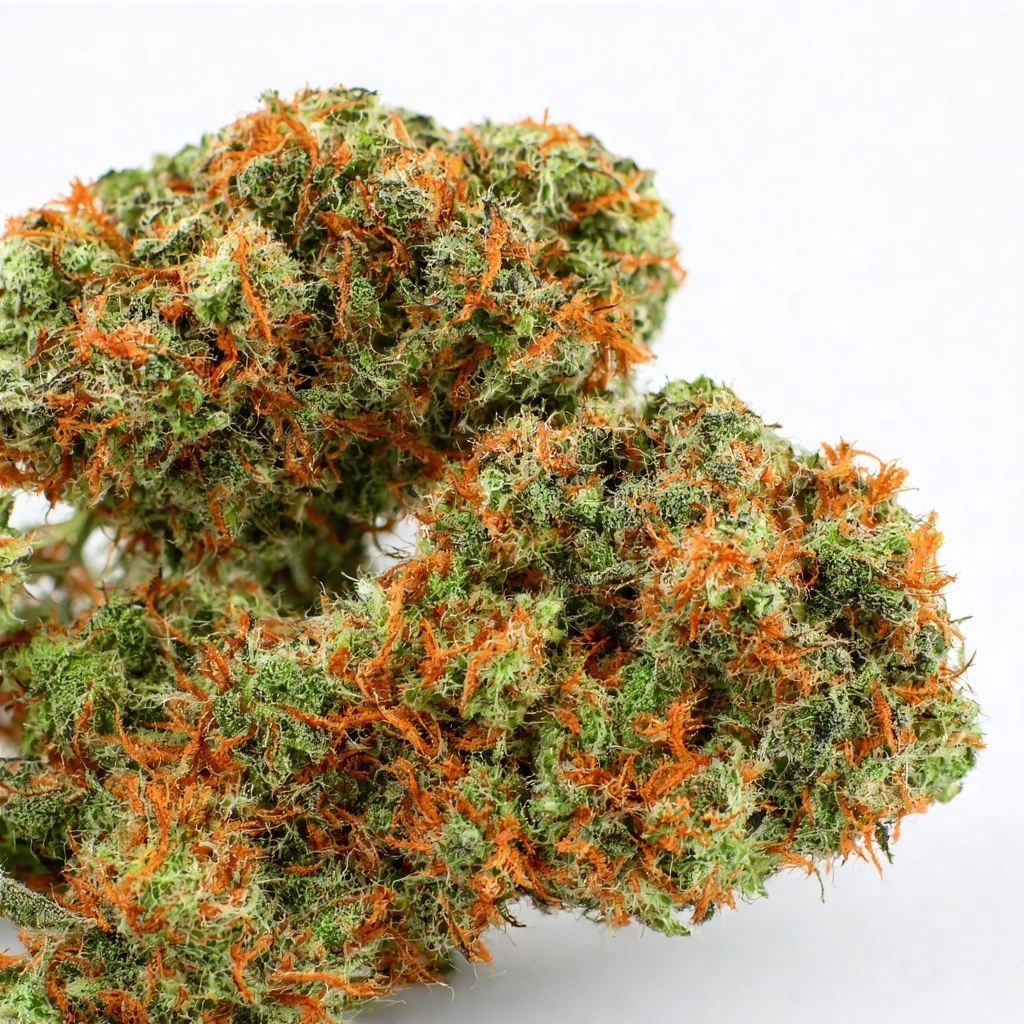
Babushka Black Auto
Babushka Black Auto
What is the Babushka Black Auto strain?
Babushka Black Auto is a hybrid cannabis strain with up to 19.0% THC, known for its calm effects and berry and cherry flavor profile.
Babushka Black Auto is created by Russian breeder Kalashnikov Seeds and represents the first-ever cross between Crimean and Pakistani genetics in the history of breeding. The strain is a hybrid of Crimean Ruderalis and Pakistani Indica genetics, with a composition of 80% indica, 10% sativa, and 10% ruderalis. This unique indica-dominant autoflowering variety is only available in feminized seed form. The strain inherits vivid coloration saturated with dark violet tones and exquisite resin production, making it excellent for creating high-quality concentrates. It distinguishes itself with an outstanding aroma that is sweet and warming, combining Crimean hardiness with the best Pakistani indica characteristics. Babushka Black Auto presents as a gorgeous plant that entices the senses with beautiful violet colors and an amazing scent. The variety received its "warm" and "home-like" name from its comforting effects, as who else but a true Russian grandmother (babushka) can calm you down, feed you something tasty, and warm you up on a cold day.
What are the effects of Babushka Black Auto?
What are the medical benefits of Babushka Black Auto?
- Users report relief from insomnia
- May help with stress and anxiety
- Often used for relaxation
- Users report pain relief
This is not medical advice. Consult a healthcare professional.
What are the side effects of Babushka Black Auto?
- 💧 Dry Mouth
- Dry mouth
- Potential productivity decrease
- Possible dry eyes
How do you grow Babushka Black Auto?
Babushka Black Auto has a flowering time of 55-60 days from seed to harvest and grows to a compact height of 50-80cm. This autoflowering variety is not difficult to grow, making it suitable for less experienced growers to achieve good results. The plant grows fast and doesn't require much maintenance to thrive. It can be cultivated both indoors and outdoors with a total flowering time of approximately 78 days. Indoor harvest yields range from 300-450 g/m², while outdoor harvests produce 35-110 grams per plant. The compact height of 50-80cm makes it an excellent choice for small growing spaces. Temperature considerations are important - if temperatures exceed 28-29°C (82-84°F), the plant may not develop its characteristic purple hue.
How should you use Babushka Black Auto?
Babushka Black Auto is a hybrid strain with 19.0% THC, which is moderate potency. As a hybrid, it offers versatility for both daytime and evening use.
Beginners
Start with 1-2 small inhalations or 2.5-5mg if using edibles. Wait 15 minutes before taking more.
Regular Users
A standard session of 3-5 inhalations or 5-15mg edible dose. Effects typically onset within 5-15 minutes when inhaled, 30-90 minutes for edibles.
Experienced Users
Adjust to personal tolerance. Moderate doses should provide a satisfying experience.
Start low and go slow. This is not medical advice — consult a healthcare professional before using cannabis.
Frequently Asked Questions
How does Babushka Black Auto make you feel?
Babushka Black Auto is a hybrid strain that primarily produces calm effects, followed by relaxed. Users report the dominant effect at 95% intensity. With 19.0% THC, this strain is moderately strong and suitable for regular consumers.
Is Babushka Black Auto good for medical use?
Babushka Black Auto has been reported by users for users report relief from insomnia, may help with stress and anxiety, often used for relaxation, users report pain relief. As a hybrid, it offers a balanced profile that may work throughout the day.
This is not medical advice. Consult a healthcare professional.
Are there side effects with Babushka Black Auto?
Some users have reported dry mouth, dry mouth, potential productivity decrease, possible dry eyes when using Babushka Black Auto. Starting with a low dose and staying hydrated can help minimize these effects.
What does Babushka Black Auto taste and smell like?
Babushka Black Auto features a flavor profile of berry, cherry, earthy, fruity, tea. The dominant terpenes are Myrcene and Caryophyllene, which contribute to its distinctive aroma.
What do users say about Babushka Black Auto?
Log in to write a review.
No reviews yet. Be the first to review Babushka Black Auto!
What does the research say about Babushka Black Auto?
Babushka Black Auto is a hybrid cannabis strain containing up to 19.0% THC, with a terpene profile dominated by Myrcene and Caryophyllene. Below are authoritative resources for understanding the compounds in this strain.
Terpene Research
Cannabinoid Information
Cannabis Regulations & Safety
What strains are similar to Babushka Black Auto?
#1 Stunna
HybridTHC: 20.0% - 30.0%
#41 Zi
HybridTHC: Unknown
$.i.N.G
HybridTHC: 18.0% - 24.0%
'78 LA OG Affie
HybridTHC: 22.0% - 23.0%
'78 Skunk 'D' x Gorilla Grape
HybridTHC: Unknown
'78 Skunk 'M' x Gorilla Grape
HybridTHC: Unknown
'87 Firebird
HybridTHC: 18.0% - 23.0%
'98 Aloha White Widow
HybridTHC: 20.0% - 25.0%