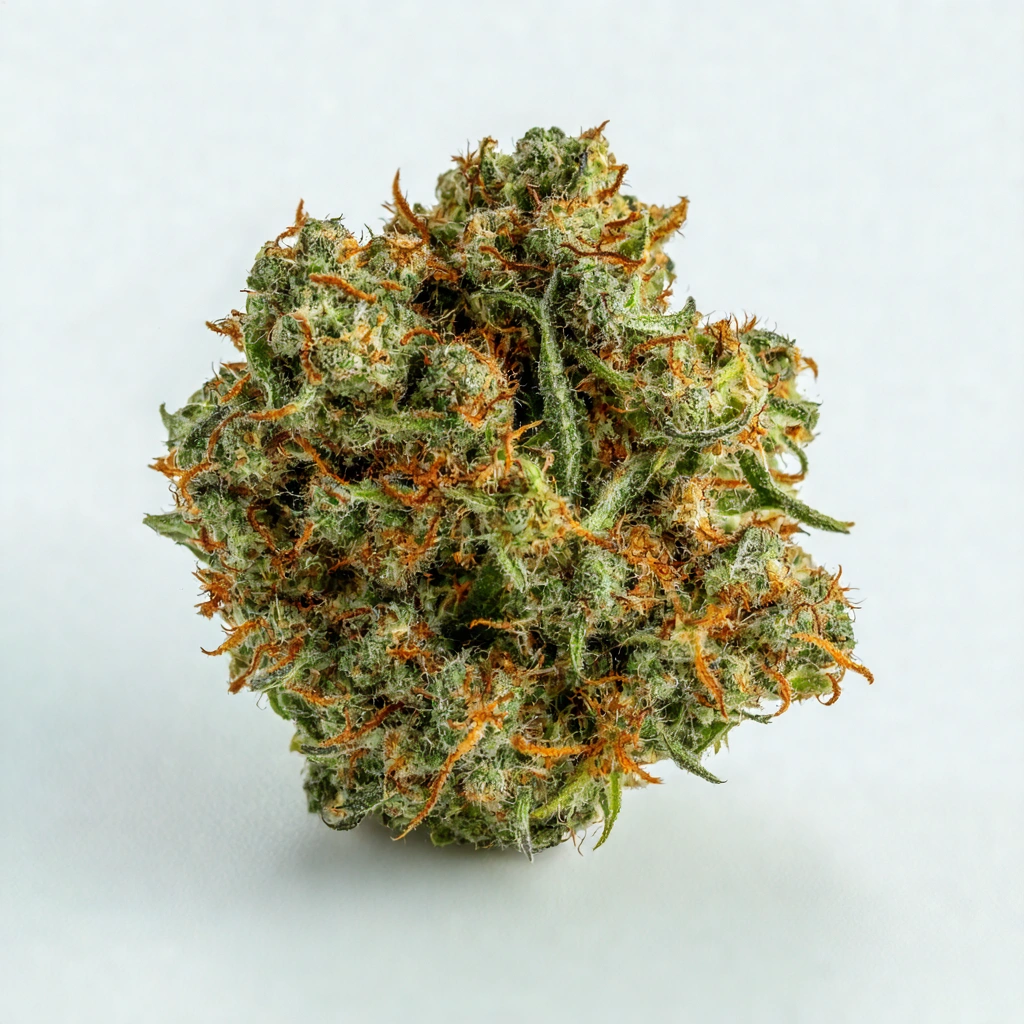
Banjerine
Banjerine
Also known as: Banjerine Fast
What is the Banjerine strain?
Banjerine is a hybrid cannabis strain with up to 28.0% THC, known for its uplifted effects and citrus and diesel flavor profile.
Banjerine is a sativa-dominant hybrid cannabis strain (80% sativa/20% indica) bred by Atlas Seeds through a cross between Banjo and Cotton Candy. This vigorous and uniform strain was developed by the California-based agricultural breeding company Atlas Seeds, which specializes in creating stable, high-performance genetics for commercial cultivation. The parent strain Banjo was originally created by renowned breeder Parker Sullivan, who crossed Boost and Tangelo to produce a citrus-forward hybrid that gained recognition as one of Leafly's top five strains in 2020.
Banjerine displays exceptional uniformity and vigor despite its F1 hybrid status, making it highly suitable for large-scale cultivation. The strain produces dense, resinous buds with above-average trichome production, making it particularly attractive for both flower consumption and extraction purposes. Users report that the strain transfers its distinctive terpene profile exceptionally well into concentrates and dried flowers. The buds typically cure to a slightly sticky, resin-rich consistency when properly dried and conditioned, preserving the aromatic intensity. Visual characteristics include dense bud structure with significant resin coating, and the flowers often display an attractive appearance that appeals to both consumers and hash makers.
What are the effects of Banjerine?
What are the medical benefits of Banjerine?
- Users report relief from stress and anxiety
- May help with mood enhancement
- Often used for creative focus
- Reported to assist with fatigue
This is not medical advice. Consult a healthcare professional.
What are the side effects of Banjerine?
- 💧 Dry Mouth
- 👁️ Dry Eyes
- 😰 Anxiety
- Dry mouth
- Dry eyes
- Possible anxiety in high doses
- Potential paranoia with overconsumption
How do you grow Banjerine?
Banjerine is a semi-full-term variety well-suited for outdoor cultivation with a flowering time of approximately 75 days (9-10 weeks indoors). The strain demonstrates vigorous growth, exceptional uniformity, and above-average mold and mildew resistance. For outdoor cultivation, Atlas Seeds recommends direct seeding in early to mid-May for transplanting in early to mid-June, with harvest typically occurring in September (Northern Hemisphere) or March (Southern Hemisphere). The strain produces above-average yields and is particularly noted for excellent resin production, making it ideal for extraction purposes. It shows good heat resistance and moderate cold resistance, with strong performance in various environmental conditions. Indoor plants may require height management due to sativa-dominant growth patterns.
How should you use Banjerine?
Banjerine is a hybrid strain with 28.0% THC, which is considered high potency. As a hybrid, it offers versatility for both daytime and evening use.
Beginners
Start with 1-2 small inhalations or 2.5-5mg if using edibles. Wait 15 minutes before taking more. This strain is potent — start very low.
Regular Users
A standard session of 3-5 inhalations or 5-15mg edible dose. Effects typically onset within 5-15 minutes when inhaled, 30-90 minutes for edibles.
Experienced Users
Adjust to personal tolerance. At 28.0% THC, even experienced users should respect this strain's potency.
Start low and go slow. This is not medical advice — consult a healthcare professional before using cannabis.
What is the genetic lineage of Banjerine?
What are Banjerine's parent strains?
Frequently Asked Questions
How does Banjerine make you feel?
Banjerine is a hybrid strain that primarily produces uplifted effects, followed by focused. Users report the dominant effect at 85% intensity. With 28.0% THC, this strain is considered potent and best suited for experienced users.
Is Banjerine good for medical use?
Banjerine has been reported by users for users report relief from stress and anxiety, may help with mood enhancement, often used for creative focus, reported to assist with fatigue. As a hybrid, it offers a balanced profile that may work throughout the day.
This is not medical advice. Consult a healthcare professional.
Are there side effects with Banjerine?
Some users have reported dry mouth, dry eyes, anxiety, dry mouth, dry eyes, possible anxiety in high doses, potential paranoia with overconsumption when using Banjerine. Starting with a low dose and staying hydrated can help minimize these effects.
What does Banjerine taste and smell like?
Banjerine features a flavor profile of citrus, diesel, floral, orange, pine, sweet. The dominant terpenes are Limonene and Myrcene, which contribute to its distinctive aroma.
What do users say about Banjerine?
Log in to write a review.
No reviews yet. Be the first to review Banjerine!
What does the research say about Banjerine?
Banjerine is a hybrid cannabis strain containing up to 28.0% THC, with a terpene profile dominated by Limonene and Myrcene. Below are authoritative resources for understanding the compounds in this strain.
Cannabinoid Information
Cannabis Regulations & Safety
What strains are similar to Banjerine?
#1 Stunna
HybridTHC: 20.0% - 30.0%
#41 Zi
HybridTHC: Unknown
$.i.N.G
HybridTHC: 18.0% - 24.0%
'78 LA OG Affie
HybridTHC: 22.0% - 23.0%
'78 Skunk 'D' x Gorilla Grape
HybridTHC: Unknown
'78 Skunk 'M' x Gorilla Grape
HybridTHC: Unknown
'87 Firebird
HybridTHC: 18.0% - 23.0%
'98 Aloha White Widow
HybridTHC: 20.0% - 25.0%