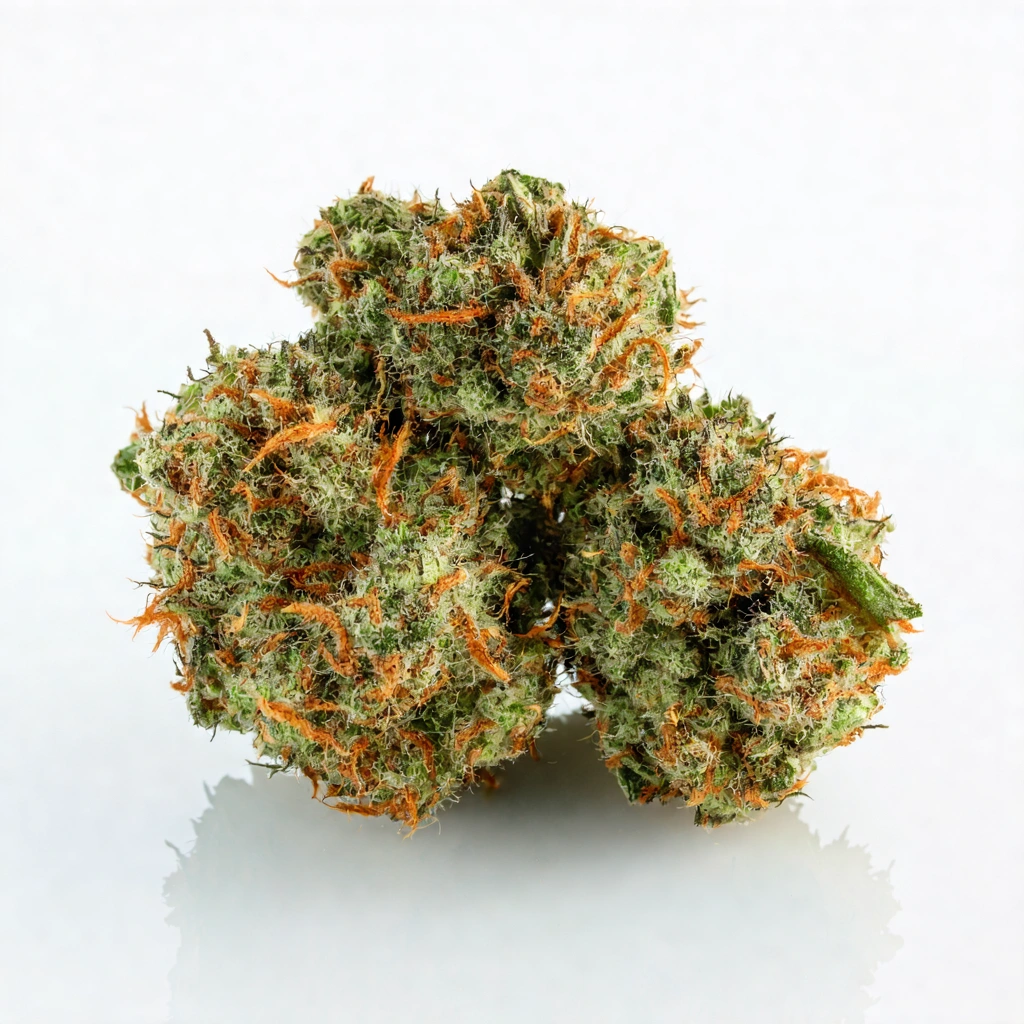
Big Bud Autoflower
Big Bud Autoflower
Also known as: Big Bud Auto, Auto Big Bud, Big Bud XXL Autoflower
What is the Big Bud Autoflower strain?
Big Bud Autoflower is a hybrid cannabis strain with up to 26.0% THC, known for its relaxed effects and earthy and floral flavor profile.
Big Bud Autoflower traces its origins to the renowned Big Bud strain that was first developed in Dutch seed banks of Amsterdam during the 1980s. Originally created in the United States, the classic Big Bud strain was later brought to the Netherlands during the War on Drugs era to preserve its genetics, where breeders at Sensi Seeds refined and stabilized it by crossing it with Skunk #1 and Northern Lights. The autoflowering version was created by crossing the original Big Bud strain with Ruderalis genetics, allowing it to flower automatically regardless of light cycles. The genetic makeup includes a blend of Afghan, Northern Lights, Skunk #1, and Ruderalis.
Big Bud Autoflower is an 80% indica-dominant, 20% sativa hybrid that combines robust genetics from classic strains. As the name suggests, this strain is renowned for producing exceptionally large, dense buds that are heavily coated in resinous trichomes. The buds are rock hard, soaked in resin and often have a crystalline sheen due to the amount of trichomes, with a good calyx to leaf ratio that keeps buds large after trimming. Plants typically reach heights of 90 to 130 cm indoors and up to 150 cm outdoors, maintaining a medium stature with a bushy, Christmas tree-like structure.
What are the effects of Big Bud Autoflower?
What are the medical benefits of Big Bud Autoflower?
- Users report relief from chronic pain
- May help with insomnia
- Often used for stress relief
- Users report assistance with muscle spasms
- May help with anxiety
- Often used for arthritis pain management
This is not medical advice. Consult a healthcare professional.
What are the side effects of Big Bud Autoflower?
- 💧 Dry Mouth
- 👁️ Dry Eyes
- Dry mouth
- Dry eyes
- Drowsiness
- Possible couch-lock in high doses
- May cause grogginess the next day
How do you grow Big Bud Autoflower?
Big Bud Autoflower completes its flowering phase in approximately 6 to 8 weeks, with a total lifecycle of around 8-10 weeks (56-65 days) from seed to harvest. Indoor growers can expect yields ranging from 400 to 500 grams per square meter, while outdoor plants may produce between 100 to 200 grams each under optimal conditions. This strain is considered easy to grow and suitable for beginners, as it doesn't require much more than basic feeding and adapts well to different growing environments. It can be grown both indoors and outdoors, thriving in controlled indoor climates or outdoor conditions similar to the Mediterranean with semi-humid environments. Thanks to its autoflowering traits, it's possible to harvest up to 4 times per year outdoors, with best results when planting from June until August. Low stress training (LST) can improve airflow and yields, though support structures may be needed during flowering due to the heavy, dense bud formation.
How should you use Big Bud Autoflower?
Big Bud Autoflower is a hybrid strain with 26.0% THC, which is considered high potency. As a hybrid, it offers versatility for both daytime and evening use.
Beginners
Start with 1-2 small inhalations or 2.5-5mg if using edibles. Wait 15 minutes before taking more. This strain is potent — start very low.
Regular Users
A standard session of 3-5 inhalations or 5-15mg edible dose. Effects typically onset within 5-15 minutes when inhaled, 30-90 minutes for edibles.
Experienced Users
Adjust to personal tolerance. At 26.0% THC, even experienced users should respect this strain's potency.
Start low and go slow. This is not medical advice — consult a healthcare professional before using cannabis.
What is the genetic lineage of Big Bud Autoflower?
What are Big Bud Autoflower's parent strains?
Frequently Asked Questions
How does Big Bud Autoflower make you feel?
Big Bud Autoflower is a hybrid strain that primarily produces relaxed effects, followed by body high. Users report the dominant effect at 90% intensity. With 26.0% THC, this strain is considered potent and best suited for experienced users.
Is Big Bud Autoflower good for medical use?
Big Bud Autoflower has been reported by users for users report relief from chronic pain, may help with insomnia, often used for stress relief, users report assistance with muscle spasms, may help with anxiety, often used for arthritis pain management. As a hybrid, it offers a balanced profile that may work throughout the day.
This is not medical advice. Consult a healthcare professional.
Are there side effects with Big Bud Autoflower?
Some users have reported dry mouth, dry eyes, dry mouth, dry eyes, drowsiness, possible couch-lock in high doses, may cause grogginess the next day when using Big Bud Autoflower. Starting with a low dose and staying hydrated can help minimize these effects.
What does Big Bud Autoflower taste and smell like?
Big Bud Autoflower features a flavor profile of earthy, floral, fruity, pine, skunk, spicy, sweet. The dominant terpenes are Myrcene and Caryophyllene, which contribute to its distinctive aroma.
What do users say about Big Bud Autoflower?
Log in to write a review.
No reviews yet. Be the first to review Big Bud Autoflower!
What does the research say about Big Bud Autoflower?
Big Bud Autoflower is a hybrid cannabis strain containing up to 26.0% THC, with a terpene profile dominated by Myrcene and Caryophyllene. Below are authoritative resources for understanding the compounds in this strain.
Cannabinoid Information
Cannabis Regulations & Safety
What strains are similar to Big Bud Autoflower?
#1 Stunna
HybridTHC: 20.0% - 30.0%
#41 Zi
HybridTHC: Unknown
$.i.N.G
HybridTHC: 18.0% - 24.0%
'78 LA OG Affie
HybridTHC: 22.0% - 23.0%
'78 Skunk 'D' x Gorilla Grape
HybridTHC: Unknown
'78 Skunk 'M' x Gorilla Grape
HybridTHC: Unknown
'87 Firebird
HybridTHC: 18.0% - 23.0%
'98 Aloha White Widow
HybridTHC: 20.0% - 25.0%