Blue Hawaiian
Blue Hawaiian
Also known as: Blue Hawaiian Sativa
What is the Blue Hawaiian strain?
Blue Hawaiian is a hybrid cannabis strain with up to 24.0% THC, known for its euphoric effects and berry and blueberry flavor profile.
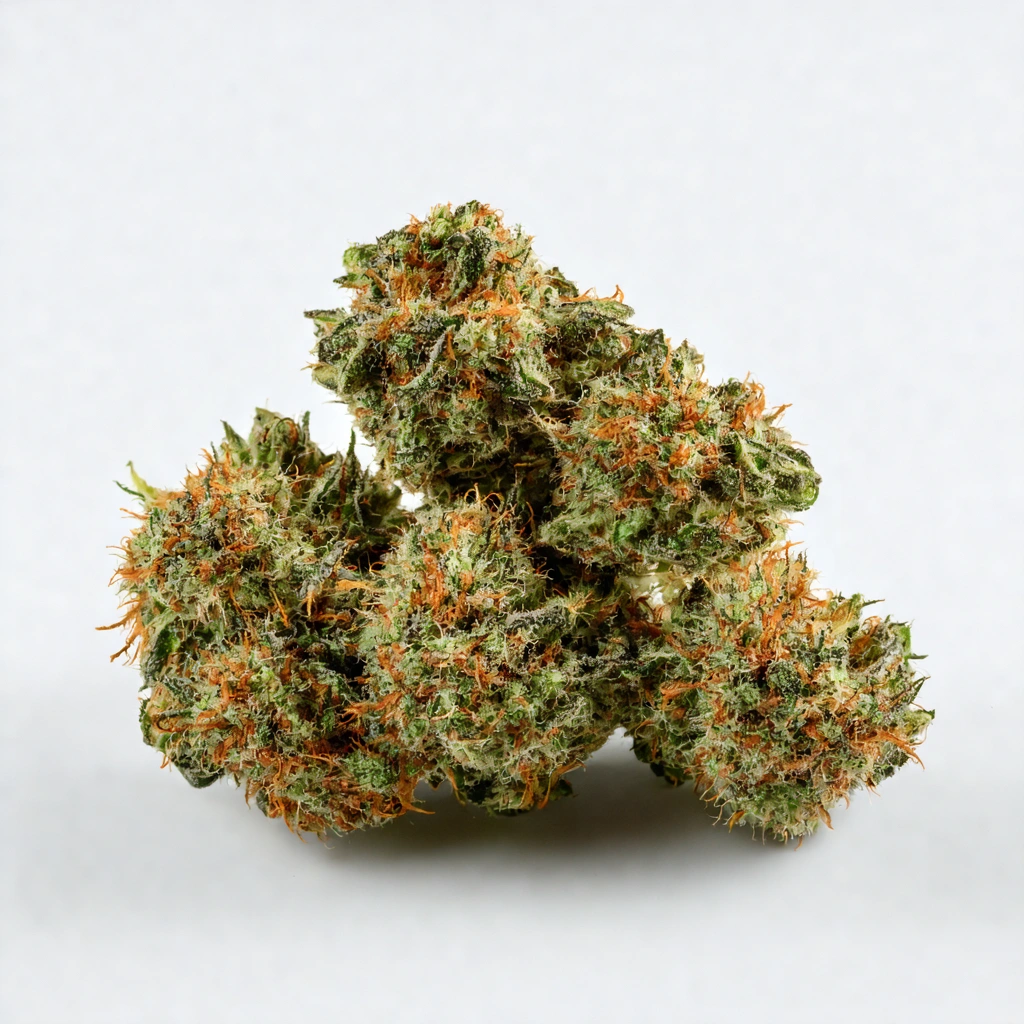
Blue Hawaiian is a sativa-dominant hybrid strain (typically 60-70% sativa, 30-40% indica) that originated as a cross between the legendary Blueberry indica and Hawaiian Sativa. This strain was created by Jordan of the Islands, a prolific breeding operation based in scenic Vancouver Island, British Columbia. The strain hails from Hāiku on the North Shore of Maui and is considered a Hawaiian heirloom by local farmers, though there is debate whether this is a lost landrace or an early strain bred by crossing DJ Short's Blueberry with a local Hawaiian Sativa. Blue Hawaiian produces dense, light green buds with orange and red hues, covered with deep red and orange colored hairs and a thick coat of sparkly trichomes. In certain phenotypes, the buds are also streaked with blue and purple hues due to high concentrations of anthocyanin pigments passed on from the Blueberry parent strain, which are stimulated by cold temperatures during cultivation. The strain offers a tropical flavor and scent profile, reminiscent of sweet berries, citrus, and fresh soil, with sweet berries and citrus notes dominating, complemented by an undertone of fresh soil.
What are the effects of Blue Hawaiian?
What are the medical benefits of Blue Hawaiian?
- Users report relief from chronic pain
- May help with anxiety and stress
- Often used for depression management
- Users report relief from headaches and migraines
- May help with nausea
- Often used for appetite stimulation
- Users report help with insomnia in higher doses
This is not medical advice. Consult a healthcare professional.
What are the side effects of Blue Hawaiian?
- 💧 Dry Mouth
- 👁️ Dry Eyes
- 🤕 Headache
- 💫 Dizziness
- Dry mouth
- Dry eyes
- Possible headache with excessive use
- Potential paranoia in high doses
- Possible dizziness
How do you grow Blue Hawaiian?
Blue Hawaiian can be grown indoors in closely-monitored conditions or outdoors in Mediterranean-like climates with average daily temperatures in the 70 degree Fahrenheit range. Plants can reach heights of 5 to 6 feet due to its sativa genetics. The strain has a flowering time of 9 to 10 weeks (63 days) when grown indoors. Indoor yields range from 15-30 grams per plant or 16-20 ounces per square meter, while outdoor cultivation can produce up to 24 ounces or more per plant. When cultivating indoors, growers should train their plants by trimming and pruning branches early in the growing process. Growers looking to bring out the strain's full visual appeal should artificially 'shock' its pigments into producing vibrant purple hues by exposing plants to cold temperatures just before flowering. Outdoor cultivation requires a Mediterranean climate with daytime temperatures within a 70° Fahrenheit range.
How should you use Blue Hawaiian?
Blue Hawaiian is a hybrid strain with 24.0% THC, which is moderate potency. As a hybrid, it offers versatility for both daytime and evening use.
Beginners
Start with 1-2 small inhalations or 2.5-5mg if using edibles. Wait 15 minutes before taking more. This strain is potent — start very low.
Regular Users
A standard session of 3-5 inhalations or 5-15mg edible dose. Effects typically onset within 5-15 minutes when inhaled, 30-90 minutes for edibles.
Experienced Users
Adjust to personal tolerance. Moderate doses should provide a satisfying experience.
Start low and go slow. This is not medical advice — consult a healthcare professional before using cannabis.
What is the genetic lineage of Blue Hawaiian?
What are Blue Hawaiian's parent strains?
What strains were bred from Blue Hawaiian?
Frequently Asked Questions
How does Blue Hawaiian make you feel?
Blue Hawaiian is a hybrid strain that primarily produces euphoric effects, followed by uplifted. Users report the dominant effect at 85% intensity. With 24.0% THC, this strain is moderately strong and suitable for regular consumers.
Is Blue Hawaiian good for medical use?
Blue Hawaiian has been reported by users for users report relief from chronic pain, may help with anxiety and stress, often used for depression management, users report relief from headaches and migraines, may help with nausea, often used for appetite stimulation, users report help with insomnia in higher doses. As a hybrid, it offers a balanced profile that may work throughout the day.
This is not medical advice. Consult a healthcare professional.
Are there side effects with Blue Hawaiian?
Some users have reported dry mouth, dry eyes, headache, dizziness, dry mouth, dry eyes, possible headache with excessive use, potential paranoia in high doses, possible dizziness when using Blue Hawaiian. Starting with a low dose and staying hydrated can help minimize these effects.
What does Blue Hawaiian taste and smell like?
Blue Hawaiian features a flavor profile of berry, blueberry, citrus, earthy, pine, pineapple, sweet, tropical. The dominant terpenes are Myrcene and Caryophyllene, which contribute to its distinctive aroma.
What do users say about Blue Hawaiian?
Log in to write a review.
No reviews yet. Be the first to review Blue Hawaiian!
What does the research say about Blue Hawaiian?
Blue Hawaiian is a hybrid cannabis strain containing up to 24.0% THC, with a terpene profile dominated by Myrcene and Caryophyllene. Below are authoritative resources for understanding the compounds in this strain.
Cannabinoid Information
Cannabis Regulations & Safety
What strains are similar to Blue Hawaiian?
#1 Stunna
HybridTHC: 20.0% - 30.0%
#41 Zi
HybridTHC: Unknown
$.i.N.G
HybridTHC: 18.0% - 24.0%
'78 LA OG Affie
HybridTHC: 22.0% - 23.0%
'78 Skunk 'D' x Gorilla Grape
HybridTHC: Unknown
'78 Skunk 'M' x Gorilla Grape
HybridTHC: Unknown
'87 Firebird
HybridTHC: 18.0% - 23.0%
'98 Aloha White Widow
HybridTHC: 20.0% - 25.0%