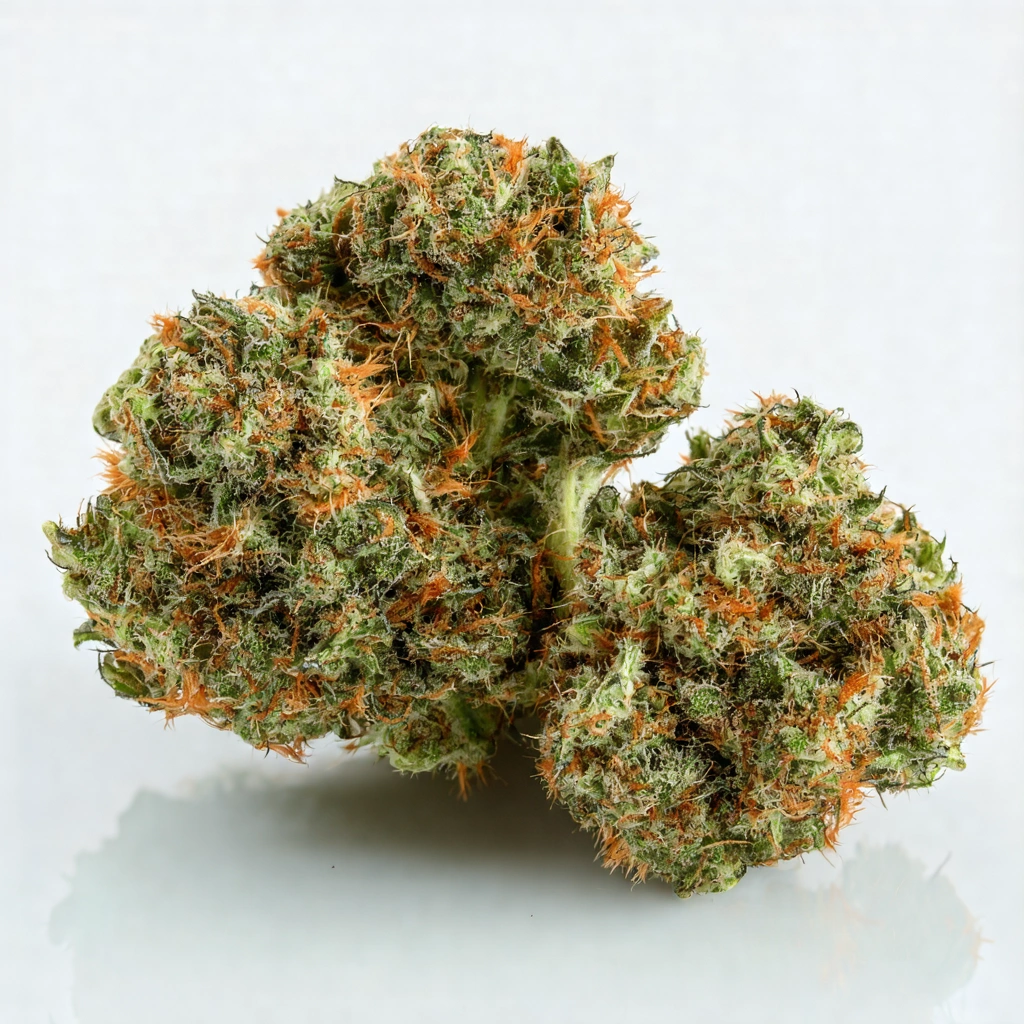
Captain Crunch
Captain Crunch
Also known as: Captain Krunch, Crunch Berry, Crunch Berries, Crunch Berry Kush
What is the Captain Crunch strain?
Captain Crunch is a hybrid cannabis strain with up to 27.0% THC, known for its relaxed effects and berry and cereal flavor profile.
Captain Crunch is an indica-dominant hybrid cannabis strain developed by Exotic Genetix, a High Times award-winning breeding team from Washington. The genetic lineage remains somewhat mysterious, with most sources indicating it's a cross between OG Kush and Kushberry, though some also mention Triple OG x Blueberry combinations. The strain maintains a 70:30 indica/sativa ratio with moderate potency typically ranging from 10-15% THC, though some phenotypes can reach up to 27%. The buds are visually striking, featuring large, dark green nugs densely coated with frosty trichomes and adorned with fine orange hairs that create a crystalline appearance. The strain earned its name from its distinctive cereal-like aroma that remarkably resembles Captain Crunch cereal, accompanied by sweet berry notes and pine undertones. This unique aromatic profile, combined with its therapeutic potential for chronic pain relief, has made it a popular choice within the cannabis community.
What are the effects of Captain Crunch?
What are the medical benefits of Captain Crunch?
- Users report relief from chronic pain
- May help with stress and anxiety
- Often used for insomnia
- Users report relief from depression
- May help with appetite loss
This is not medical advice. Consult a healthcare professional.
What are the side effects of Captain Crunch?
- 💧 Dry Mouth
- 👁️ Dry Eyes
- Dry mouth
- Dry eyes
- Possible couch-lock at higher doses
How do you grow Captain Crunch?
Captain Crunch is considered a challenging strain to grow, producing medium-tall plants that benefit from regular pruning and training techniques during flowering phases. The flowering cycle takes just under 60 days (8-10 weeks) with high yields in the range of 450g/m² indoors. Growers should employ methods such as SCROGs, SOGs, or topping to manage the plant's ample height and bushy branching. Outdoor harvest typically occurs in early October, though the strain flourishes better in controlled indoor environments. The strain thrives in sunny and warm climates, with optimal indoor temperatures between 68-77°F (20-25°C) and relative humidity levels around 40-50% during vegetative stage, adjusting to 50-60% during flowering.
How should you use Captain Crunch?
Captain Crunch is a hybrid strain with 27.0% THC, which is considered high potency. As a hybrid, it offers versatility for both daytime and evening use.
Beginners
Start with 1-2 small inhalations or 2.5-5mg if using edibles. Wait 15 minutes before taking more. This strain is potent — start very low.
Regular Users
A standard session of 3-5 inhalations or 5-15mg edible dose. Effects typically onset within 5-15 minutes when inhaled, 30-90 minutes for edibles.
Experienced Users
Adjust to personal tolerance. At 27.0% THC, even experienced users should respect this strain's potency.
Start low and go slow. This is not medical advice — consult a healthcare professional before using cannabis.
What is the genetic lineage of Captain Crunch?
What are Captain Crunch's parent strains?
What strains were bred from Captain Crunch?
Frequently Asked Questions
How does Captain Crunch make you feel?
Captain Crunch is a hybrid strain that primarily produces relaxed effects, followed by euphoric. Users report the dominant effect at 90% intensity. With 27.0% THC, this strain is considered potent and best suited for experienced users.
Is Captain Crunch good for medical use?
Captain Crunch has been reported by users for users report relief from chronic pain, may help with stress and anxiety, often used for insomnia, users report relief from depression, may help with appetite loss. As a hybrid, it offers a balanced profile that may work throughout the day.
This is not medical advice. Consult a healthcare professional.
Are there side effects with Captain Crunch?
Some users have reported dry mouth, dry eyes, dry mouth, dry eyes, possible couch-lock at higher doses when using Captain Crunch. Starting with a low dose and staying hydrated can help minimize these effects.
What does Captain Crunch taste and smell like?
Captain Crunch features a flavor profile of berry, cereal, earthy, pine, sweet, vanilla. The dominant terpenes are Myrcene and Caryophyllene, which contribute to its distinctive aroma.
What do users say about Captain Crunch?
Log in to write a review.
No reviews yet. Be the first to review Captain Crunch!
What does the research say about Captain Crunch?
Captain Crunch is a hybrid cannabis strain containing up to 27.0% THC, with a terpene profile dominated by Myrcene and Caryophyllene. Below are authoritative resources for understanding the compounds in this strain.
Cannabinoid Information
Cannabis Regulations & Safety
What strains are similar to Captain Crunch?
#1 Stunna
HybridTHC: 20.0% - 30.0%
#41 Zi
HybridTHC: Unknown
$.i.N.G
HybridTHC: 18.0% - 24.0%
'78 LA OG Affie
HybridTHC: 22.0% - 23.0%
'78 Skunk 'D' x Gorilla Grape
HybridTHC: Unknown
'78 Skunk 'M' x Gorilla Grape
HybridTHC: Unknown
'87 Firebird
HybridTHC: 18.0% - 23.0%
'98 Aloha White Widow
HybridTHC: 20.0% - 25.0%