Custard
Custard
What is the Custard strain?
Custard is a hybrid cannabis strain with up to 27.0% THC, known for its creative effects and earthy and mango flavor profile.
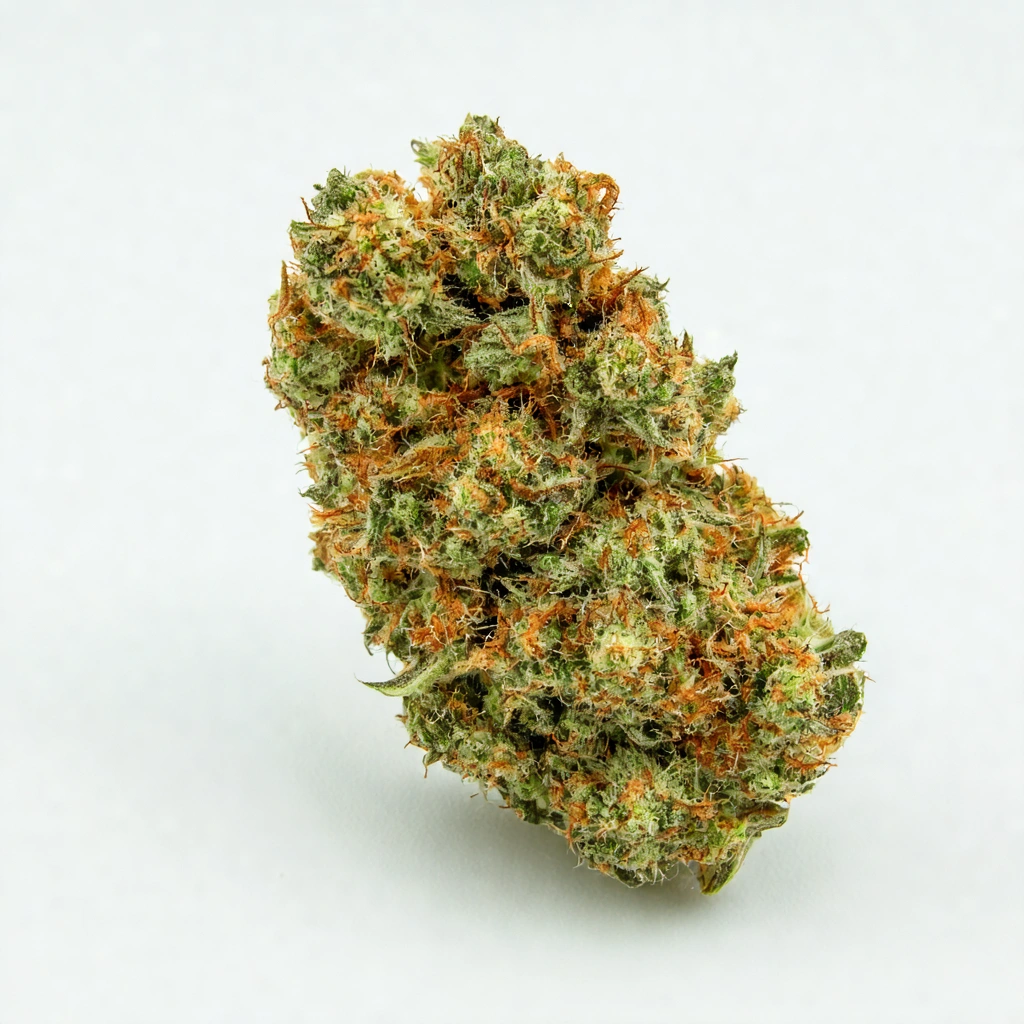
Custard is a sativa-dominant hybrid cannabis strain bred by Lost Labs Genetics through a cross of Swazi Gold and Animal Cookies. This unique strain has an interesting backstory, with its Landrace Swaziland Gold genetics being brought back to Australia in the late 1970s by locals from Shangeni Loop National Park in South Africa, preserved for years before being outcrossed to an Animal Cookies male. The strain showcases the breeder's commitment to preserving African genetics and bringing back terpene profiles that had been lost over the years. Custard exhibits distinctive tropical characteristics inherited from its African landrace parent, combined with the modern appeal and potency of Animal Cookies. The buds develop into frosty, Christmas tree-like formations with malleable branching and tight, asymmetrical formations that spiral up each stem. The nugs are notably hard and heavily frosted with trichomes.
What are the effects of Custard?
What are the medical benefits of Custard?
- Users report enhanced creativity and focus
- May help with fatigue
- Often used for mood enhancement
This is not medical advice. Consult a healthcare professional.
What are the side effects of Custard?
- 💧 Dry Mouth
- 👁️ Dry Eyes
- Dry mouth
- Dry eyes
- Possible anxiety at higher doses
How do you grow Custard?
Custard is very easy to grow with excellent yield potential ranging from 650-1100g/m² indoors. The strain shows malleable branching and frosty Christmas tree aesthetics with tight bud formations. It has a flowering time of approximately 62 days and can be cultivated indoors, outdoors, or in greenhouse settings. The plant loves light and develops asymmetrically whorl buds up each stem. Lost Labs Genetics has only made this strain available as regular seeds, never feminized. The strain shows robust growth characteristics inherited from its landrace parent.
How should you use Custard?
Custard is a hybrid strain with 27.0% THC, which is considered high potency. As a hybrid, it offers versatility for both daytime and evening use.
Beginners
Start with 1-2 small inhalations or 2.5-5mg if using edibles. Wait 15 minutes before taking more. This strain is potent — start very low.
Regular Users
A standard session of 3-5 inhalations or 5-15mg edible dose. Effects typically onset within 5-15 minutes when inhaled, 30-90 minutes for edibles.
Experienced Users
Adjust to personal tolerance. At 27.0% THC, even experienced users should respect this strain's potency.
Start low and go slow. This is not medical advice — consult a healthcare professional before using cannabis.
What is the genetic lineage of Custard?
What are Custard's parent strains?
Frequently Asked Questions
How does Custard make you feel?
Custard is a hybrid strain that primarily produces creative effects, followed by uplifted. Users report the dominant effect at 85% intensity. With 27.0% THC, this strain is considered potent and best suited for experienced users.
Is Custard good for medical use?
Custard has been reported by users for users report enhanced creativity and focus, may help with fatigue, often used for mood enhancement. As a hybrid, it offers a balanced profile that may work throughout the day.
This is not medical advice. Consult a healthcare professional.
Are there side effects with Custard?
Some users have reported dry mouth, dry eyes, dry mouth, dry eyes, possible anxiety at higher doses when using Custard. Starting with a low dose and staying hydrated can help minimize these effects.
What does Custard taste and smell like?
Custard features a flavor profile of earthy, mango, mint, sweet, tropical. The dominant terpenes are Limonene and Myrcene, which contribute to its distinctive aroma.
What do users say about Custard?
Log in to write a review.
No reviews yet. Be the first to review Custard!
What does the research say about Custard?
Custard is a hybrid cannabis strain containing up to 27.0% THC, with a terpene profile dominated by Limonene and Myrcene. Below are authoritative resources for understanding the compounds in this strain.
Terpene Research
Cannabinoid Information
Cannabis Regulations & Safety
What strains are similar to Custard?
#1 Stunna
HybridTHC: 20.0% - 30.0%
#41 Zi
HybridTHC: Unknown
$.i.N.G
HybridTHC: 18.0% - 24.0%
'78 LA OG Affie
HybridTHC: 22.0% - 23.0%
'78 Skunk 'D' x Gorilla Grape
HybridTHC: Unknown
'78 Skunk 'M' x Gorilla Grape
HybridTHC: Unknown
'87 Firebird
HybridTHC: 18.0% - 23.0%
'98 Aloha White Widow
HybridTHC: 20.0% - 25.0%