Holy Roller
Holy Roller
Also known as: Holly Roller, Holy Roller OG
What is the Holy Roller strain?
Holy Roller is a hybrid cannabis strain with up to 25.0% THC, known for its happy effects and citrus and earthy flavor profile.
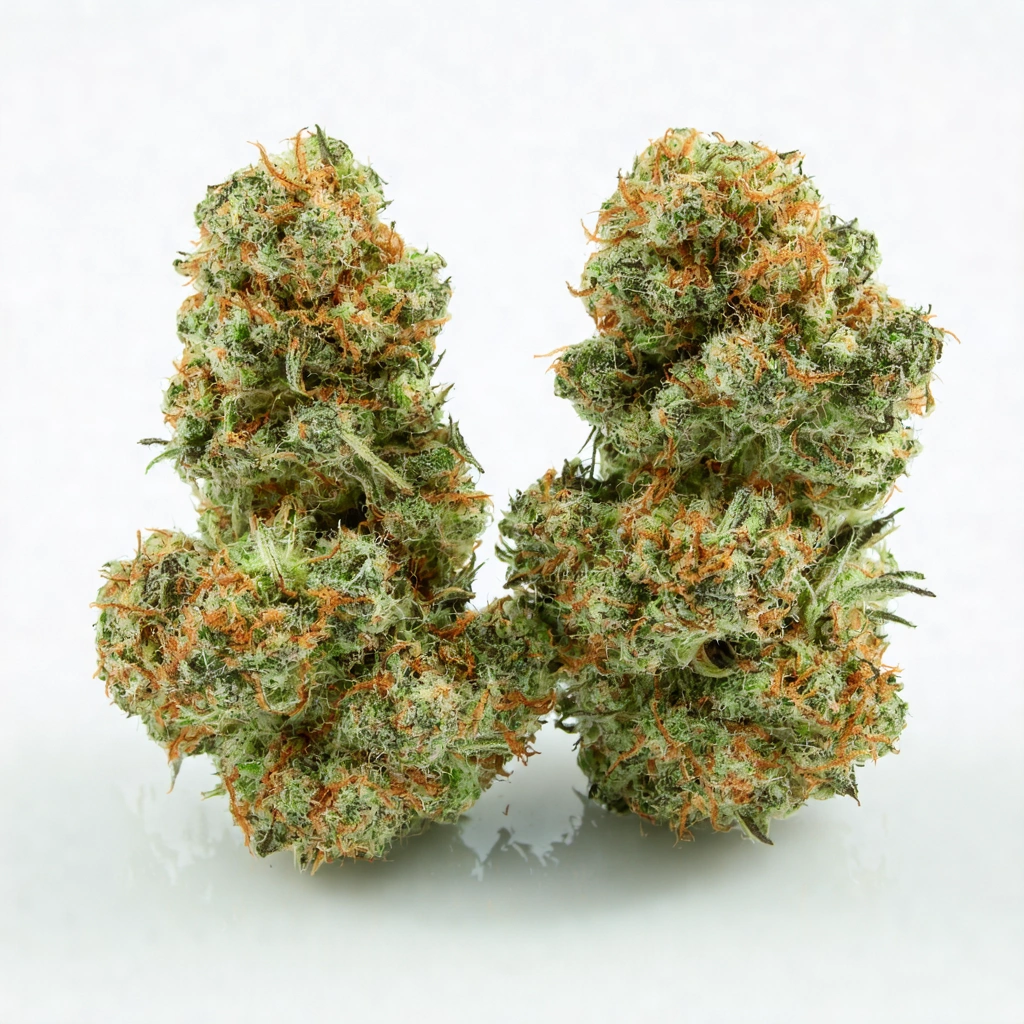
Holy Roller is a sativa-dominant hybrid cannabis strain (approximately 60% sativa/40% indica) developed by Archive Seed Bank through crossing Big Sur Holy Weed, a classic California sativa haze, with Do-Si-Dos. This unique genetic combination has resulted in a strain that marries traditional West Coast cannabis characteristics with modern dessert-like qualities. The strain is known for producing long, dense colas adorned with trichome-splashed buds that exhibit a distinctive appearance with forest green coloration, thick amber pistils, and a frosty coating of white crystal trichomes.
Holy Roller has gained recognition for its complex and varied flavor profile, which can range significantly between phenotypes. Some expressions offer refreshing eucalyptus or turpentine-like aromas, while others lean toward the Do-Si-Dos lineage with lime haze flavors. The strain's terpene profile is dominated by myrcene, limonene, and beta-caryophyllene, contributing to its distinctive sensory characteristics and therapeutic potential. This cultivar has become popular among connoisseurs seeking something unique and outside the conventional flavor spectrum, offering a perfect balance between uplifting cerebral effects and physical relaxation.
What are the effects of Holy Roller?
What are the medical benefits of Holy Roller?
- Users report relief from chronic fatigue
- May help with depression and mood swings
- Often used for stress and anxiety management
- Reported to help with chronic pain
- May assist with migraines and headaches
This is not medical advice. Consult a healthcare professional.
What are the side effects of Holy Roller?
- 💧 Dry Mouth
- 👁️ Dry Eyes
- Dry mouth
- Dry eyes
- Possible anxiety in sensitive users at high doses
How do you grow Holy Roller?
Holy Roller is considered a relatively easy strain to cultivate, suitable for both novice and experienced growers. The strain thrives in both indoor and outdoor environments with a moderate flowering time of 8-10 weeks (56-70 days). Plants typically remain compact at 0-4 feet in height, making them manageable for indoor grows. Indoor yields range from 400-600 grams per square meter, while outdoor plants can produce 350-600 grams per plant. The strain prefers temperate to cool climates and is ready for outdoor harvest in early September. Growers should note that some phenotypes may experience structural challenges including node splitting, making it potentially more suitable for experienced cultivators despite its generally easy-growing nature.
How should you use Holy Roller?
Holy Roller is a hybrid strain with 25.0% THC, which is considered high potency. As a hybrid, it offers versatility for both daytime and evening use.
Beginners
Start with 1-2 small inhalations or 2.5-5mg if using edibles. Wait 15 minutes before taking more. This strain is potent — start very low.
Regular Users
A standard session of 3-5 inhalations or 5-15mg edible dose. Effects typically onset within 5-15 minutes when inhaled, 30-90 minutes for edibles.
Experienced Users
Adjust to personal tolerance. At 25.0% THC, even experienced users should respect this strain's potency.
Start low and go slow. This is not medical advice — consult a healthcare professional before using cannabis.
What is the genetic lineage of Holy Roller?
What are Holy Roller's parent strains?
Frequently Asked Questions
How does Holy Roller make you feel?
Holy Roller is a hybrid strain that primarily produces happy effects, followed by euphoric. Users report the dominant effect at 85% intensity. With 25.0% THC, this strain is considered potent and best suited for experienced users.
Is Holy Roller good for medical use?
Holy Roller has been reported by users for users report relief from chronic fatigue, may help with depression and mood swings, often used for stress and anxiety management, reported to help with chronic pain, may assist with migraines and headaches. As a hybrid, it offers a balanced profile that may work throughout the day.
This is not medical advice. Consult a healthcare professional.
Are there side effects with Holy Roller?
Some users have reported dry mouth, dry eyes, dry mouth, dry eyes, possible anxiety in sensitive users at high doses when using Holy Roller. Starting with a low dose and staying hydrated can help minimize these effects.
What does Holy Roller taste and smell like?
Holy Roller features a flavor profile of citrus, earthy, herbal, lemon, lime, mint, nutty, pine. The dominant terpenes are Terpinolene and Myrcene, which contribute to its distinctive aroma.
What do users say about Holy Roller?
Log in to write a review.
No reviews yet. Be the first to review Holy Roller!
What does the research say about Holy Roller?
Holy Roller is a hybrid cannabis strain containing up to 25.0% THC, with a terpene profile dominated by Terpinolene and Myrcene. Below are authoritative resources for understanding the compounds in this strain.
Terpene Research
Cannabinoid Information
Cannabis Regulations & Safety
What strains are similar to Holy Roller?
#1 Stunna
HybridTHC: 20.0% - 30.0%
#41 Zi
HybridTHC: Unknown
$.i.N.G
HybridTHC: 18.0% - 24.0%
'78 LA OG Affie
HybridTHC: 22.0% - 23.0%
'78 Skunk 'D' x Gorilla Grape
HybridTHC: Unknown
'78 Skunk 'M' x Gorilla Grape
HybridTHC: Unknown
'87 Firebird
HybridTHC: 18.0% - 23.0%
'98 Aloha White Widow
HybridTHC: 20.0% - 25.0%