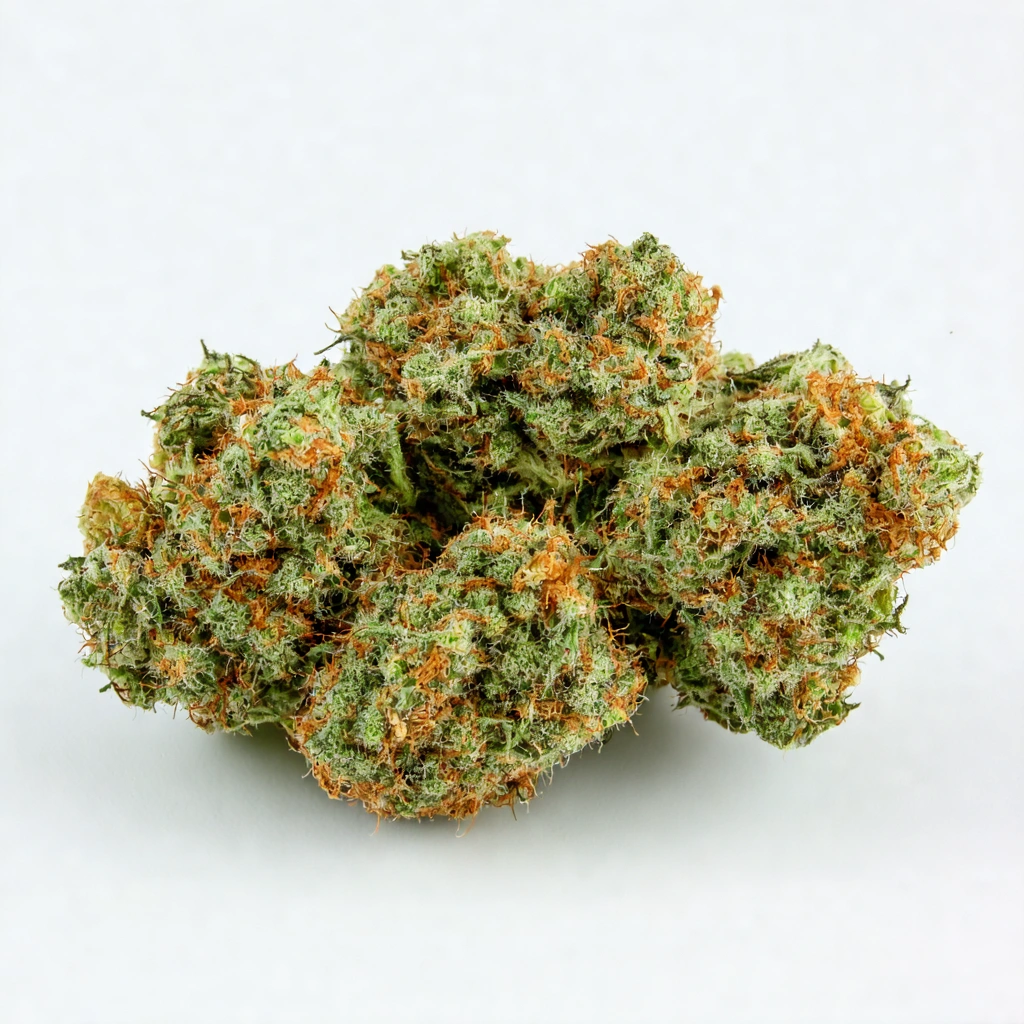
LA Kush
LA Kush
Also known as: Los Angeles Kush
What is the LA Kush strain?
LA Kush is a hybrid cannabis strain with up to 35.0% THC, known for its relaxed effects and citrus and earthy flavor profile.
LA Kush, also known as Los Angeles Kush, is an indica-dominant hybrid cannabis strain with mysterious genetic origins that has become a staple of California's cannabis culture. The strain is believed to be a variety of OG Kush, possibly a select phenotype of Abusive OG, and was originally bred in Los Angeles, California. LA Kush is an indica-dominant hybrid (approximately 70% indica and 30% sativa) with widely debated genetics. Despite its unclear lineage, the strain has established itself as a notable presence within the cannabis community due to its potent effects and distinctive characteristics.
The strain presents dense, compact buds with a striking appearance. These buds have small to medium-sized dark forest green heart-shaped nugs with fiery orange hairs and translucent fine trichomes. The buds display two different shades of medium to darker green that appear lighter due to fine clear trichomes and burnt orange pistils, with super dense structure. LA Kush is renowned for its complex terpene profile that creates an distinctive sensory experience, combining earthy pine notes with menthol undertones that reflect its OG Kush heritage.
What are the effects of LA Kush?
What are the medical benefits of LA Kush?
- Users report relief from chronic pain
- May help with stress management
- Often used for inflammation
- Users report benefits for muscle spasms
- May assist with insomnia
- Often used for depression
- Users report appetite stimulation
This is not medical advice. Consult a healthcare professional.
What are the side effects of LA Kush?
- 💧 Dry Mouth
- 👁️ Dry Eyes
- 😰 Anxiety
- Dry mouth
- Dry eyes
- Possible anxiety in sensitive users
- Mild dizziness in some cases
- Potential headache with overconsumption
How do you grow LA Kush?
LA Kush has a flowering time of 8-10 weeks when grown indoors. The plants are relatively simple to cultivate, reaching moderate size with substantial yield, and are suitable for both indoor and outdoor growth, making them excellent for novice and experienced growers alike. LA Kush thrives in a Mediterranean-style climate similar to Southern California, preferring warm, dry weather with optimal temperatures of 70-80°F (21-27°C). Indoor cultivation allows greater control over environmental factors, with high-intensity LED or HPS lights recommended, humidity kept at 50-60% during vegetative growth and reduced to 40-50% during flowering. The strain is moderate to high-yielding with dense bud structure requiring careful pruning and proper feeding, with indoor growers often seeing more consistent development than outdoor cultivation.
How should you use LA Kush?
LA Kush is a hybrid strain with 35.0% THC, which is considered high potency. As a hybrid, it offers versatility for both daytime and evening use.
Beginners
Start with 1-2 small inhalations or 2.5-5mg if using edibles. Wait 15 minutes before taking more. This strain is potent — start very low.
Regular Users
A standard session of 3-5 inhalations or 5-15mg edible dose. Effects typically onset within 5-15 minutes when inhaled, 30-90 minutes for edibles.
Experienced Users
Adjust to personal tolerance. At 35.0% THC, even experienced users should respect this strain's potency.
Start low and go slow. This is not medical advice — consult a healthcare professional before using cannabis.
What is the genetic lineage of LA Kush?
What are LA Kush's parent strains?
What strains were bred from LA Kush? (7)
Frequently Asked Questions
How does LA Kush make you feel?
LA Kush is a hybrid strain that primarily produces relaxed effects, followed by happy. Users report the dominant effect at 85% intensity. With 35.0% THC, this strain is considered potent and best suited for experienced users.
Is LA Kush good for medical use?
LA Kush has been reported by users for users report relief from chronic pain, may help with stress management, often used for inflammation, users report benefits for muscle spasms, may assist with insomnia, often used for depression, users report appetite stimulation. As a hybrid, it offers a balanced profile that may work throughout the day.
This is not medical advice. Consult a healthcare professional.
Are there side effects with LA Kush?
Some users have reported dry mouth, dry eyes, anxiety, dry mouth, dry eyes, possible anxiety in sensitive users, mild dizziness in some cases, potential headache with overconsumption when using LA Kush. Starting with a low dose and staying hydrated can help minimize these effects.
What does LA Kush taste and smell like?
LA Kush features a flavor profile of citrus, earthy, mint, pine, spicy. The dominant terpenes are Myrcene and Limonene, which contribute to its distinctive aroma.
What do users say about LA Kush?
Log in to write a review.
No reviews yet. Be the first to review LA Kush!
What does the research say about LA Kush?
LA Kush is a hybrid cannabis strain containing up to 35.0% THC, with a terpene profile dominated by Myrcene and Limonene. Below are authoritative resources for understanding the compounds in this strain.
Cannabinoid Information
Cannabis Regulations & Safety
What strains are similar to LA Kush?
#1 Stunna
HybridTHC: 20.0% - 30.0%
#41 Zi
HybridTHC: Unknown
$.i.N.G
HybridTHC: 18.0% - 24.0%
'78 LA OG Affie
HybridTHC: 22.0% - 23.0%
'78 Skunk 'D' x Gorilla Grape
HybridTHC: Unknown
'78 Skunk 'M' x Gorilla Grape
HybridTHC: Unknown
'87 Firebird
HybridTHC: 18.0% - 23.0%
'98 Aloha White Widow
HybridTHC: 20.0% - 25.0%