Pacific Frost
Pacific Frost
What is the Pacific Frost strain?
Pacific Frost is a hybrid cannabis strain with up to 35.0% THC, known for its happy effects and berry and earthy flavor profile.
Pacific Frost is a slightly indica dominant hybrid strain (60% indica/40% sativa) created through crossing the classic Pacific OG X Frosty strains. Grown by Cannafornia, Pacific Frost is a cross between Pacific OG and Frosty, and represents a boutique-style strain that has gained popularity in West Coast cannabis circles, particularly California. The strain is named for its celebrity parentage and gorgeous appearance, though she's hard to find outside of California and even harder to grow at home, making it a sought-after cultivar among cannabis connoisseurs.
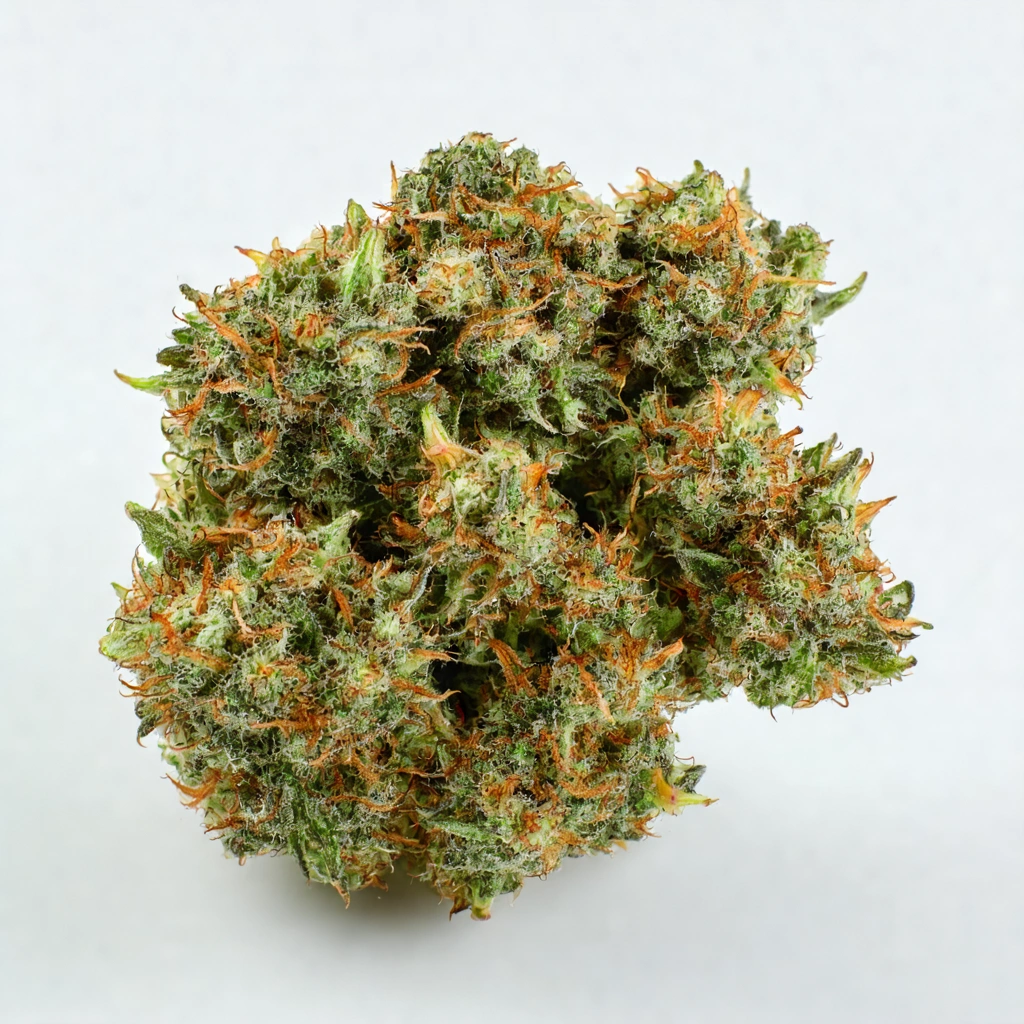
Visually, Pacific Frost lives up to its name with super frosty long grape-shaped bright neon green nugs with thin orange hairs and a snowy blanketed coating of vividly white and gold crystal trichomes. True to its name, Pacific Frost often looks sugar-dusted, with trichomes clustering densely on bracts and sugar leaves, creating what many describe as a "granulated" appearance due to the thick resin coverage. The strain exhibits coloration ranges from lime to forest green with occasional purple striping in colder finishes, correlating with anthocyanin expression near late flower. Pistils are typically tangerine to deep orange, offering contrast against the frosty backdrop.
What are the effects of Pacific Frost?
What are the medical benefits of Pacific Frost?
- Users report relief from depression
- May help with chronic stress and anxiety
- Often used for headaches and migraines
- Users report benefits for chronic pain
- May assist with sleep onset when used in evening
This is not medical advice. Consult a healthcare professional.
What are the side effects of Pacific Frost?
- 💧 Dry Mouth
- 👁️ Dry Eyes
- Dry mouth
- Dry eyes
- Possible couch lock at higher doses
- May cause grogginess in some users
How do you grow Pacific Frost?
Indoors, expect an 8–9 week flowering time from the flip, with some phenos ready by day 56–60 and others preferring day 63–65 for full terpene maturity. Outdoors, harvest windows cluster around late September to mid-October in temperate zones. Yields are competitive: indoors 450–600 g/m² under optimized LED, with elite rooms surpassing 650 g/m². Outdoors, well-grown plants can produce 600–900 g per plant, reaching 1 kg+ in long-season climates with large root volumes. Vegetative growth is vigorous, with a medium internode distance that responds well to topping at the 5th node. A SCROG or low-stress training (LST) approach helps distribute light and maximize lateral sites. Anticipate a stretch of 1.6–2.0x in the first two weeks of bloom. Pacific Frost's dense buds necessitate vigilant humidity control to prevent botrytis and powdery mildew. Defoliate lightly at day 21 and again at day 42 to improve airflow without over-stripping sugar leaves needed for resin production. A canopy-level VPD of 1.2–1.4 kPa in mid-late flower balances transpiration and pathogen suppression. Difficulty level is intermediate to advanced due to its specific environmental requirements.
How should you use Pacific Frost?
Pacific Frost is a hybrid strain with 35.0% THC, which is considered high potency. As a hybrid, it offers versatility for both daytime and evening use.
Beginners
Start with 1-2 small inhalations or 2.5-5mg if using edibles. Wait 15 minutes before taking more. This strain is potent — start very low.
Regular Users
A standard session of 3-5 inhalations or 5-15mg edible dose. Effects typically onset within 5-15 minutes when inhaled, 30-90 minutes for edibles.
Experienced Users
Adjust to personal tolerance. At 35.0% THC, even experienced users should respect this strain's potency.
Start low and go slow. This is not medical advice — consult a healthcare professional before using cannabis.
Frequently Asked Questions
How does Pacific Frost make you feel?
Pacific Frost is a hybrid strain that primarily produces happy effects, followed by relaxed. Users report the dominant effect at 85% intensity. With 35.0% THC, this strain is considered potent and best suited for experienced users.
Is Pacific Frost good for medical use?
Pacific Frost has been reported by users for users report relief from depression, may help with chronic stress and anxiety, often used for headaches and migraines, users report benefits for chronic pain, may assist with sleep onset when used in evening. As a hybrid, it offers a balanced profile that may work throughout the day.
This is not medical advice. Consult a healthcare professional.
Are there side effects with Pacific Frost?
Some users have reported dry mouth, dry eyes, dry mouth, dry eyes, possible couch lock at higher doses, may cause grogginess in some users when using Pacific Frost. Starting with a low dose and staying hydrated can help minimize these effects.
What does Pacific Frost taste and smell like?
Pacific Frost features a flavor profile of berry, earthy, fruity, grape, herbal, spicy. The dominant terpenes are Myrcene and Limonene, which contribute to its distinctive aroma.
What do users say about Pacific Frost?
Log in to write a review.
No reviews yet. Be the first to review Pacific Frost!
What does the research say about Pacific Frost?
Pacific Frost is a hybrid cannabis strain containing up to 35.0% THC, with a terpene profile dominated by Myrcene and Limonene. Below are authoritative resources for understanding the compounds in this strain.
Cannabinoid Information
Cannabis Regulations & Safety
What strains are similar to Pacific Frost?
#1 Stunna
HybridTHC: 20.0% - 30.0%
#41 Zi
HybridTHC: Unknown
$.i.N.G
HybridTHC: 18.0% - 24.0%
'78 LA OG Affie
HybridTHC: 22.0% - 23.0%
'78 Skunk 'D' x Gorilla Grape
HybridTHC: Unknown
'78 Skunk 'M' x Gorilla Grape
HybridTHC: Unknown
'87 Firebird
HybridTHC: 18.0% - 23.0%
'98 Aloha White Widow
HybridTHC: 20.0% - 25.0%