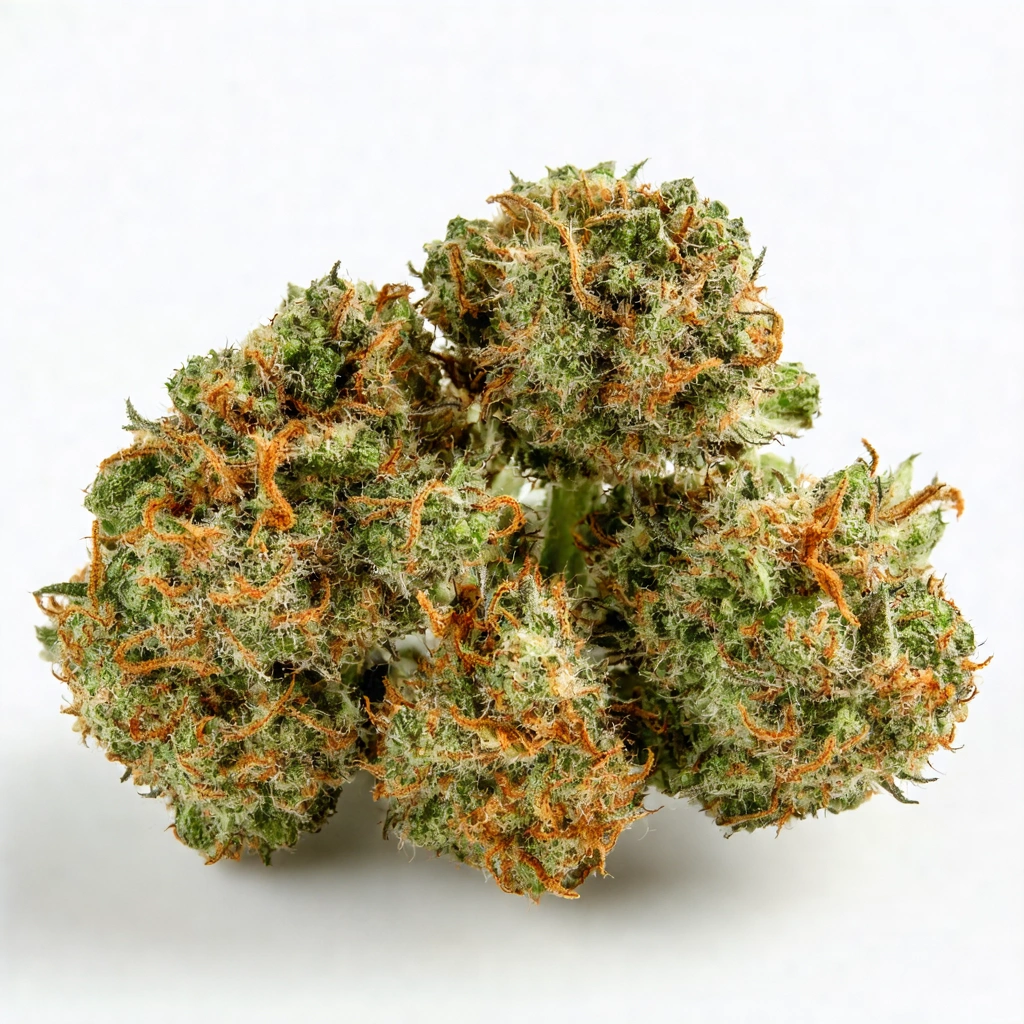
Sweet Kush
Sweet Kush
What is the Sweet Kush strain?
Sweet Kush is a hybrid cannabis strain with up to 24.0% THC, known for its uplifted effects and citrus and earthy flavor profile.
Sweet Kush is a sativa-dominant hybrid strain that blends Sweet Tooth and OG Kush genetics, typically presenting a 55% sativa / 45% indica genetic composition. The strain originates from the renowned Dutch seed banks of Amsterdam's Red Light District, created as a cross between Sweet Tooth and OG Kush with roots in Hindu Kush, Afghani, Nepalese, and Hawaiian strains, offering a rich and complex lineage. The buds are notably rock hard and soaked in resin with a crystalline sheen due to extensive trichome coverage, appearing almost moon-like with their excessive resinous coating. Sweet Kush presents a distinctive flavor profile combining honey and sweet notes with hints of earthiness, fruity undertones, and some skunkiness from its OG lineage on the exhale. Thanks to its large resin production, it serves as an ideal strain for producing high-quality extracts and concentrates. The strain was developed by Kush Cannabis Seeds through crossing Sweet Tooth (a combination of Sweet Pink Grapefruit and Blueberry) with a phenotype of OG Kush.
What are the effects of Sweet Kush?
What are the medical benefits of Sweet Kush?
- Users report relief from arthritis
- May help with insomnia
- Often used for pain management
- Users report help with anxiety
- May be used to stimulate appetite
This is not medical advice. Consult a healthcare professional.
What are the side effects of Sweet Kush?
- 💧 Dry Mouth
- 👁️ Dry Eyes
- Dry mouth
- Dry eyes
- Possible paranoia
How do you grow Sweet Kush?
Kush Cannabis Seeds recommends reserving Sweet Kush until a cultivator has an intermediate level of experience, as the plant can be temperamental in different environments and requires pruning to allow air to navigate through its lower branches. The strain has a flowering period of 8-10 weeks indoors and reaches full maturity in 56-63 days indoors or early October when growing outside. Sweet Kush produces high yields of up to 20 ounces per plant (450g+) of sparkling, compact nugs with a medium plant height of 100-150cm. The strain can be cultivated both indoors and outdoors, including greenhouse operations. Although compact and robust with moderate growing difficulty, growers should prevent pests and use quality substrates like perlite, peat, or coco coir for optimal moisture retention.
How should you use Sweet Kush?
Sweet Kush is a hybrid strain with 24.0% THC, which is moderate potency. As a hybrid, it offers versatility for both daytime and evening use.
Beginners
Start with 1-2 small inhalations or 2.5-5mg if using edibles. Wait 15 minutes before taking more. This strain is potent — start very low.
Regular Users
A standard session of 3-5 inhalations or 5-15mg edible dose. Effects typically onset within 5-15 minutes when inhaled, 30-90 minutes for edibles.
Experienced Users
Adjust to personal tolerance. Moderate doses should provide a satisfying experience.
Start low and go slow. This is not medical advice — consult a healthcare professional before using cannabis.
What is the genetic lineage of Sweet Kush?
What are Sweet Kush's parent strains?
Frequently Asked Questions
How does Sweet Kush make you feel?
Sweet Kush is a hybrid strain that primarily produces uplifted effects, followed by happy. Users report the dominant effect at 85% intensity. With 24.0% THC, this strain is moderately strong and suitable for regular consumers.
Is Sweet Kush good for medical use?
Sweet Kush has been reported by users for users report relief from arthritis, may help with insomnia, often used for pain management, users report help with anxiety, may be used to stimulate appetite. As a hybrid, it offers a balanced profile that may work throughout the day.
This is not medical advice. Consult a healthcare professional.
Are there side effects with Sweet Kush?
Some users have reported dry mouth, dry eyes, dry mouth, dry eyes, possible paranoia when using Sweet Kush. Starting with a low dose and staying hydrated can help minimize these effects.
What does Sweet Kush taste and smell like?
Sweet Kush features a flavor profile of citrus, earthy, fruity, herbal, honey, pine, sweet. The dominant terpenes are Myrcene and Limonene, which contribute to its distinctive aroma.
What do users say about Sweet Kush?
Log in to write a review.
No reviews yet. Be the first to review Sweet Kush!
What does the research say about Sweet Kush?
Sweet Kush is a hybrid cannabis strain containing up to 24.0% THC, with a terpene profile dominated by Myrcene and Limonene. Below are authoritative resources for understanding the compounds in this strain.
Cannabinoid Information
Cannabis Regulations & Safety
What strains are similar to Sweet Kush?
#1 Stunna
HybridTHC: 20.0% - 30.0%
#41 Zi
HybridTHC: Unknown
$.i.N.G
HybridTHC: 18.0% - 24.0%
'78 LA OG Affie
HybridTHC: 22.0% - 23.0%
'78 Skunk 'D' x Gorilla Grape
HybridTHC: Unknown
'78 Skunk 'M' x Gorilla Grape
HybridTHC: Unknown
'87 Firebird
HybridTHC: 18.0% - 23.0%
'98 Aloha White Widow
HybridTHC: 20.0% - 25.0%