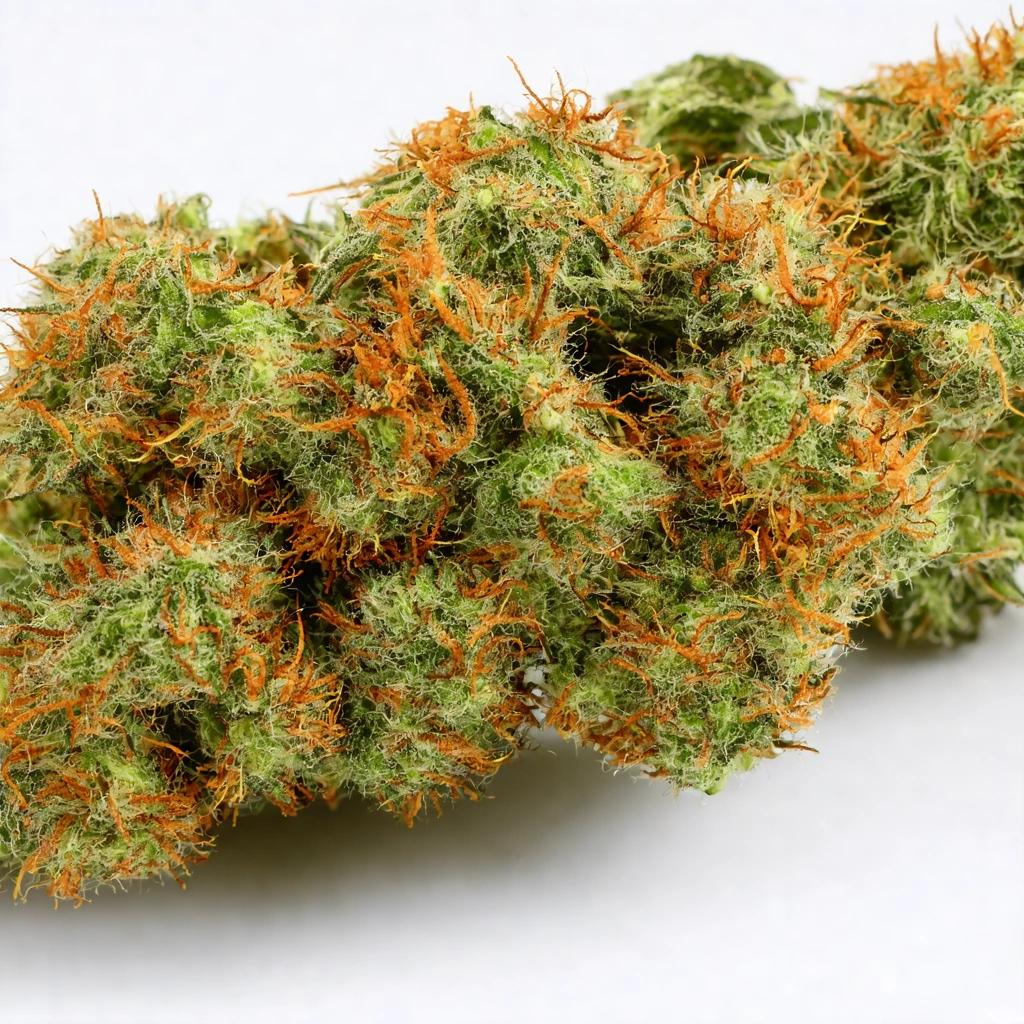
Tangie
Tangie
Also known as: Tangerine Dream (1995), The Tangie
What is the Tangie strain?
Tangie is a sativa cannabis strain with up to 24.0% THC, known for its uplifted effects and citrus and earthy flavor profile.
Tangie is a sativa-dominant cannabis strain created by crossing California Orange and Skunk #1, developed as a tribute to Tangerine Dream, a legendary zingy cultivar that rose to fame in the 1990s. Originally created by Don Morris and Aaron Yarkoni of DNA Genetics in Amsterdam in 2004, the strain was developed from a clone-only selection by Crockett that had been hidden for years before being presented to DNA. Tangie maintains a 70% sativa and 30% indica genetic profile.
The strain produces small, compact, light green buds covered in orange hairs and frosty trichomes. Plants can grow up to 6 feet tall due to their dominant sativa genetics. Tangie has won numerous awards, including winning 10 prizes in 10 months at various Cannabis Cups, with multiple first-place wins at High Times Cannabis Cup events between 2013-2014. The strain is particularly renowned for its vibrant citrus profile, with a strong, sweet aroma reminiscent of tangerines, making it a favorite among cannabis connoisseurs seeking an uplifting, energetic experience without the sedating effects typical of indica strains.
What are the effects of Tangie?
What are the medical benefits of Tangie?
- Users report relief from stress
- May help with depression
- Often used for anxiety management
- Users report appetite stimulation
- May help with fatigue
- Often used for pain relief
- Users report help with nausea
This is not medical advice. Consult a healthcare professional.
What are the side effects of Tangie?
- 💧 Dry Mouth
- 👁️ Dry Eyes
- 😰 Anxiety
- Dry mouth
- Dry eyes
- Possible anxiety in high doses
- Potential paranoia with overconsumption
- Possible headaches
How do you grow Tangie?
Tangie has a flowering time of 9-10 weeks and produces yields of 450-550g/m² indoors. The strain thrives best outdoors in soil rather than hydroponics, preferring warm, dry climates. Plants can stretch up to 6 feet in height, growing vertically until the fifth week. Due to its height requirements, it is not ideal for indoor growth. Outdoor harvest typically occurs from late September to early October. The strain is naturally hardy and resilient to common pests and diseases, making it suitable for beginners. Growing requires heavy feeding during vegetative phase and training techniques like LST or main-lining for height management in limited spaces.
How should you use Tangie?
Tangie is a sativa strain with 24.0% THC, which is moderate potency. As a sativa, it works well for daytime activities and creative sessions.
Beginners
Start with 1-2 small inhalations or 2.5-5mg if using edibles. Wait 15 minutes before taking more. This strain is potent — start very low.
Regular Users
A standard session of 3-5 inhalations or 5-15mg edible dose. Effects typically onset within 5-15 minutes when inhaled, 30-90 minutes for edibles.
Experienced Users
Adjust to personal tolerance. Moderate doses should provide a satisfying experience.
Start low and go slow. This is not medical advice — consult a healthcare professional before using cannabis.
What is the genetic lineage of Tangie?
What strains were bred from Tangie? (174)
- 24K Tangie
- Afternoon Delight
- Alien Tangie
- Auto Tangie (Tangie'matic)
- Banana Joe
- Banana Split
- Banangie
- Battle of the Tangie
- Blood Orange Sorbet
- Blood Tangerine
- Candied Grapefruit
- Cara Cara
- Chemfish Tang
- Cherry Sage BF2's
- Citrol Sledgehammer
- Citrus Sangria
- Citrus Sap
- Citrus Sunset
- Clementine
- Clementine Kush
- Clementine's Terpentine
- Clifford
- Colorado Clementines
- Cookie Tang
- Corkscrew Auto
- Cream Brulee
- Crockett's Sour Tangie
- Crosstown Traffic
- Dark Energy
- Double Tangie Banana
- Eastside Tangie
- Evil Orange
- Forbidden Fruit
- Forbidden Fruit Fast Flowering
- Forbidden Fruitz
- Forgotten Fruit
- Fresh Squeezed
- Frozen Tangie
- Fruit Orange Cookies ASB
- Funta Orange
- Georgia Tang
- Ghost Train Tangie
- GluTang
- Glue-Tang
- Golden Cobra
- Gorilla Sap
- Grapefruit Tangie
- Happy Juice
- Honey Whip
- Ice Pop
- Jiboo
- Juice Lord
- Jungle Fever
- Jungle Juice
- Killer Planet
- Kinkanna
- Klementine
- Kosher Tangie
- Kosher Tangie Kush
- Kurious Orange
- Last Tango
- Lemon Tanghulu
- Long Beach Tangie
- Magic Dragon
- Magic Marker
- Mail Order Bride
- Mallorca Tangi
- Mandarin Duck
- Mango Tango
- Marmalade
- Melon Tangie
- Meowy Wowie
- Midas
- Moontang
- Nectar Of The Gods
- Nectarine
- Neon Lights
- No Pants Dance
- OG 24K
- Oh Snap!
- Orange Barb
- Orange Blood
- Orange Blossom Trail
- Orange Chameleon
- Orange Fizz
- Orange Soda
- Orange Sorbet
- Orangeade
- Orangina
- Orangu Tangie
- P.O.G. (Passion Orange Guava)
- Passion Orange Guava
- Problem Child
- PuTang
- PuTang S1
- Purple Lemonade FF
- Purple Mandarine
- Purple Tangie
- Rainbow Tangie
- Rambutan
- Red Chile Truffles
- Red Hot Cookies
- Rucu Cucu OG
- Rucu Cucu OG Auto
- Sex Robot
- Sodalicious
- Sonic Orange
- Sour Orange
- Sour Tanghulu
- Sour Tangie
- Sour Tangie Dawg
- Space Station Orange v.2
- Squirt
- Squirt Auto
- Sumo Tangie
- Sunny D
- Sunset Flame
- Sunset Tangie
- Super Mandarina
- Super Tangie
- Super Tangilemon
- Surf'n'Turf
- Sweet Clements
- Sweet Hawaiian Tangie Banana
- Tahoe Orange
- Tang OG
- Tang-Cheese
- Tangalien
- Tangenesia
- Tangerine & Heat
- Tangerine Cookies
- Tangerine Cream
- Tangerine Skunk
- Tangie Auto
- Tangie Cake
- Tangie Cookies
- Tangie Cookies #1
- Tangie Cookies #2
- Tangie Crush
- Tangie Crush Auto
- Tangie Dream
- Tangie Ghost Train
- Tangie Goji
- Tangie Hemp
- Tangie OG
- Tangie Punch
- Tangie Ripper
- Tangie Zest #7
- Tangie'matic
- Tangie'matic Auto
- Tangieland
- Tangielope
- Tangiezozki
- Tangilope
- Tangimal
- Tango #3
- Tangoline
- Tangos
- Tangy Tree
- Tectonic Tangie
- The Big Dirty
- Tropical Coconut
- Tropical Tangie
- Tropicana Bubba
- Tropicana Cookies
- Tropicana Cookies Automatic
- Tropicana Cookies F5
- Tropicana Cookies F5 - S1
- Tropicanna Auto XXL
- Tropicanna Cookies
- Trutti Frutti
- Twisted Cherries
- Ultimate Juice
- Vitamin C
Frequently Asked Questions
How does Tangie make you feel?
Tangie is a sativa strain that primarily produces uplifted effects, followed by euphoric. Users report the dominant effect at 90% intensity. With 24.0% THC, this strain is moderately strong and suitable for regular consumers.
Is Tangie good for medical use?
Tangie has been reported by users for users report relief from stress, may help with depression, often used for anxiety management, users report appetite stimulation, may help with fatigue, often used for pain relief, users report help with nausea. As a sativa strain, it may be suitable for daytime use while managing symptoms.
This is not medical advice. Consult a healthcare professional.
Are there side effects with Tangie?
Some users have reported dry mouth, dry eyes, anxiety, dry mouth, dry eyes, possible anxiety in high doses, potential paranoia with overconsumption, possible headaches when using Tangie. Starting with a low dose and staying hydrated can help minimize these effects.
What does Tangie taste and smell like?
Tangie features a flavor profile of citrus, earthy, orange, skunk, sweet. The dominant terpenes are Limonene and Myrcene, which contribute to its distinctive aroma.
What do users say about Tangie?
Log in to write a review.
No reviews yet. Be the first to review Tangie!
What does the research say about Tangie?
Tangie is a sativa cannabis strain containing up to 24.0% THC, with a terpene profile dominated by Limonene and Myrcene. Below are authoritative resources for understanding the compounds in this strain.